
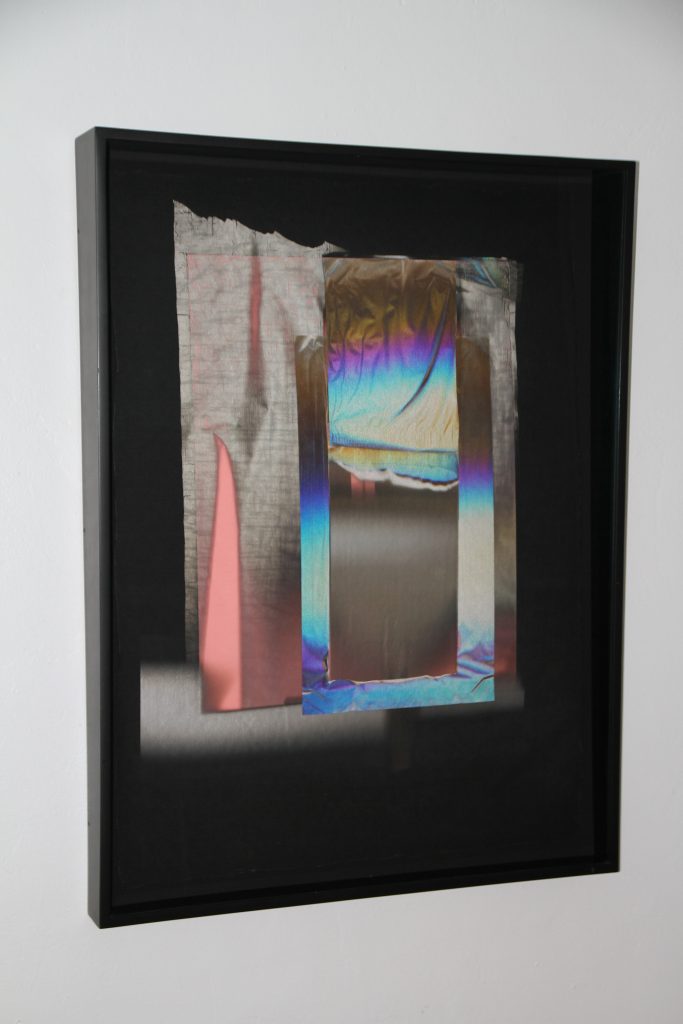
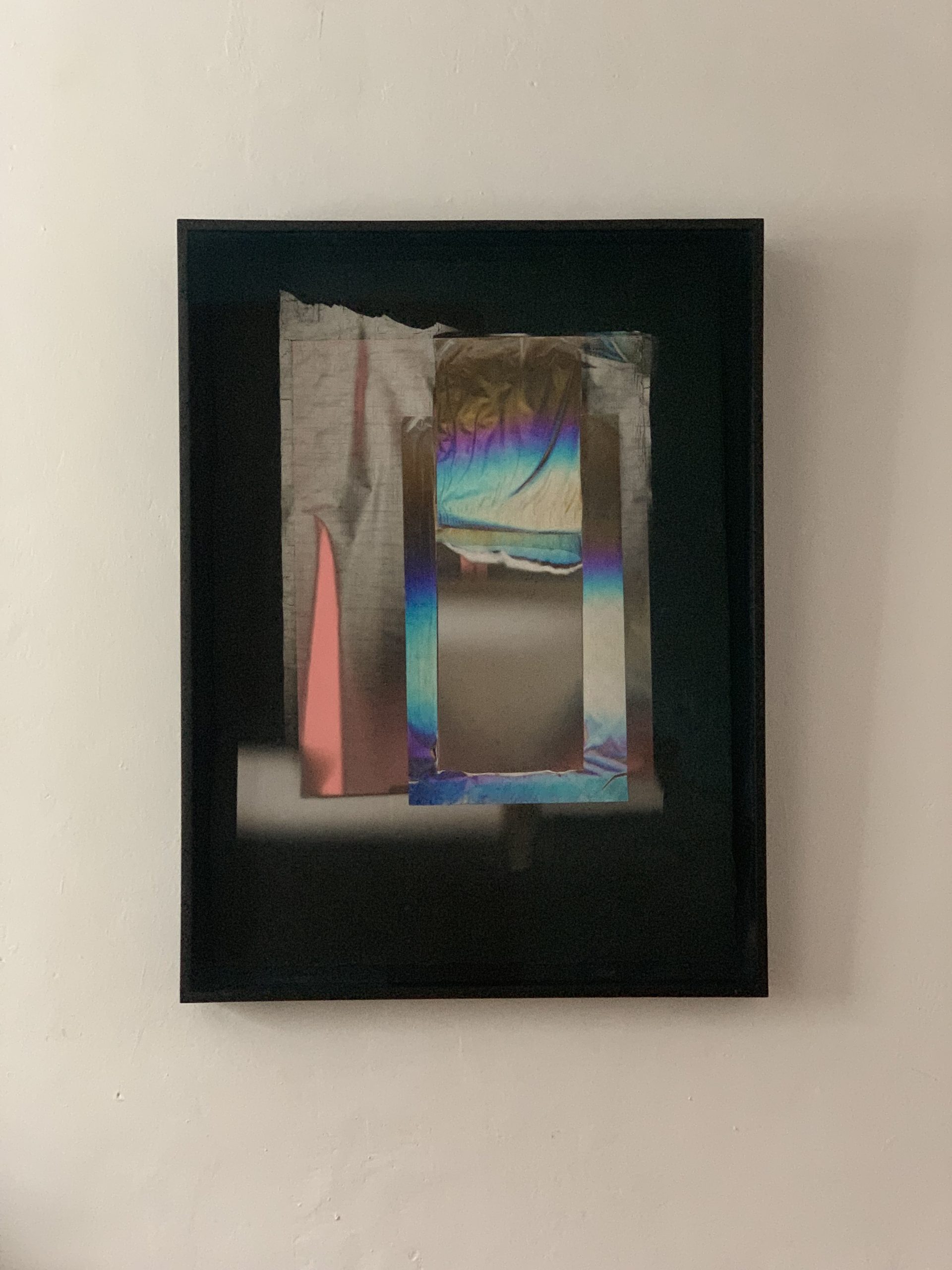
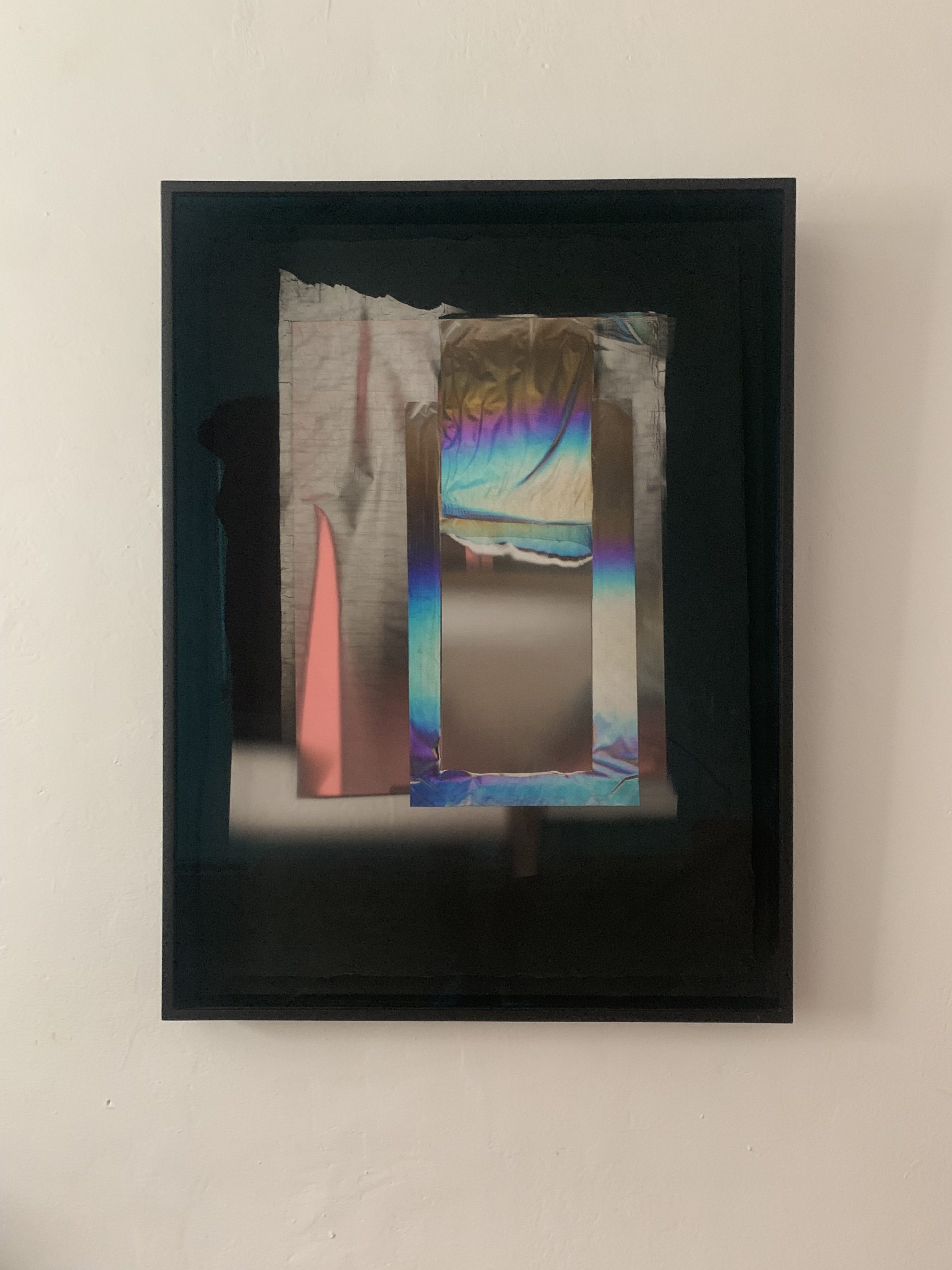
Larry Bell, AAAAA84, 2007
Mixed media on black Hiromi paper.
39 1/2 × 29 1/2 in | 100.3 × 74.9 cm.
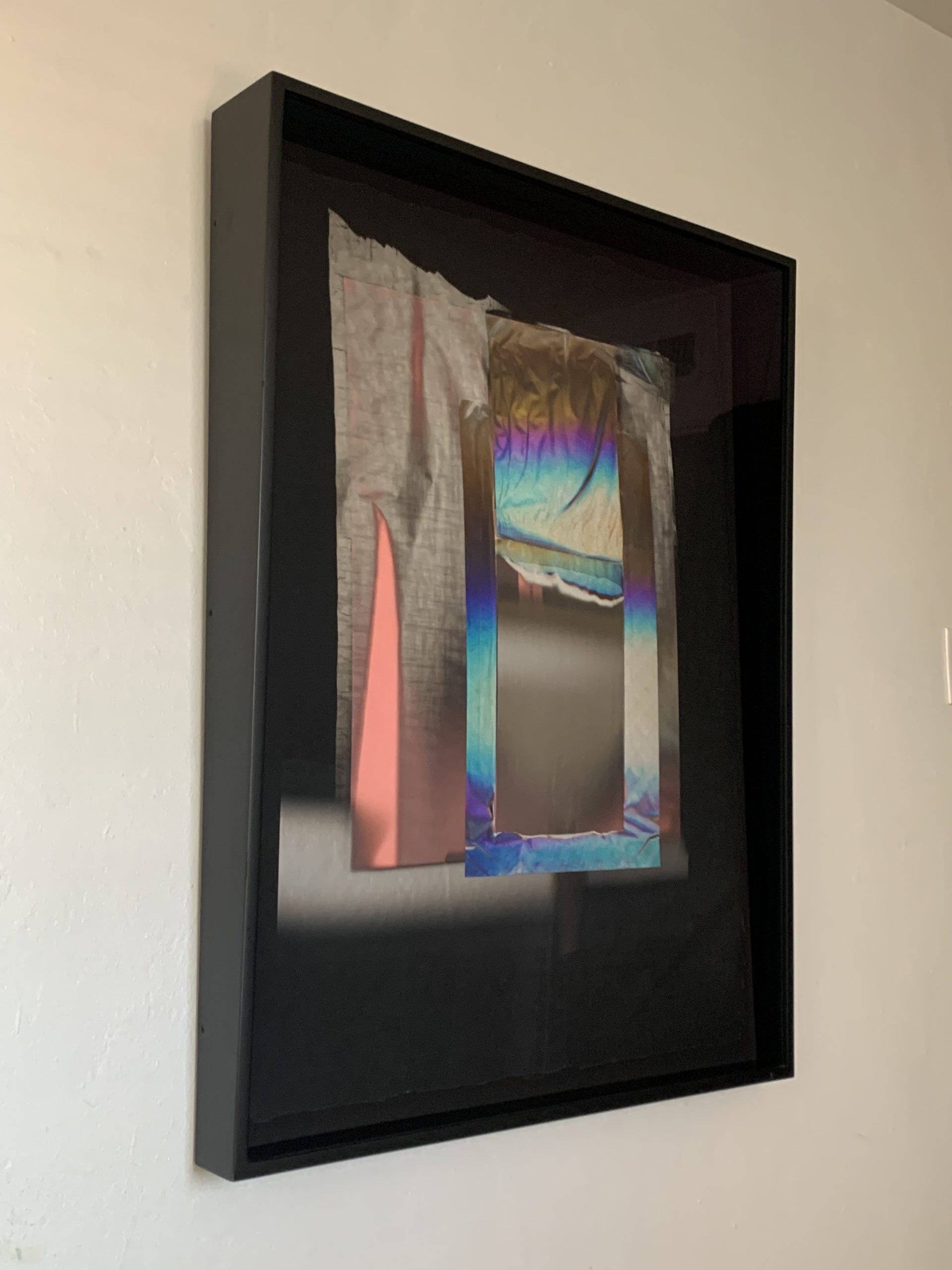
Frame included.
Materials: Mixed media on black Hiromi paper
Size: 39 1/2 × 29 1/2 in | 100.3 × 74.9 cm
Rarity: Unique
Medium: Mixed Media
Condition: Artwork is in excellent condition
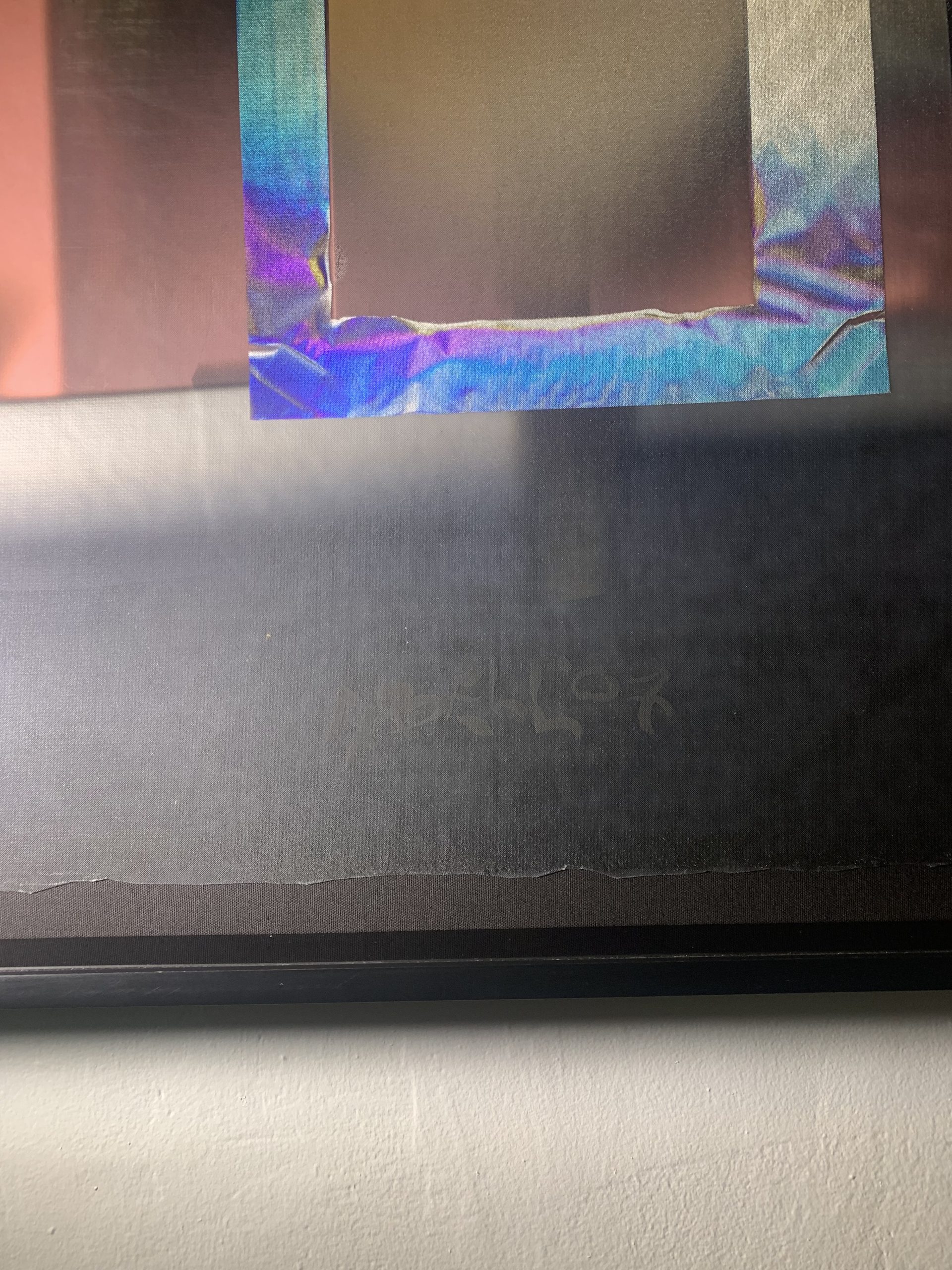
Signature: Hand-signed by artist, signed on front
Frame: Included
Series: Vapor
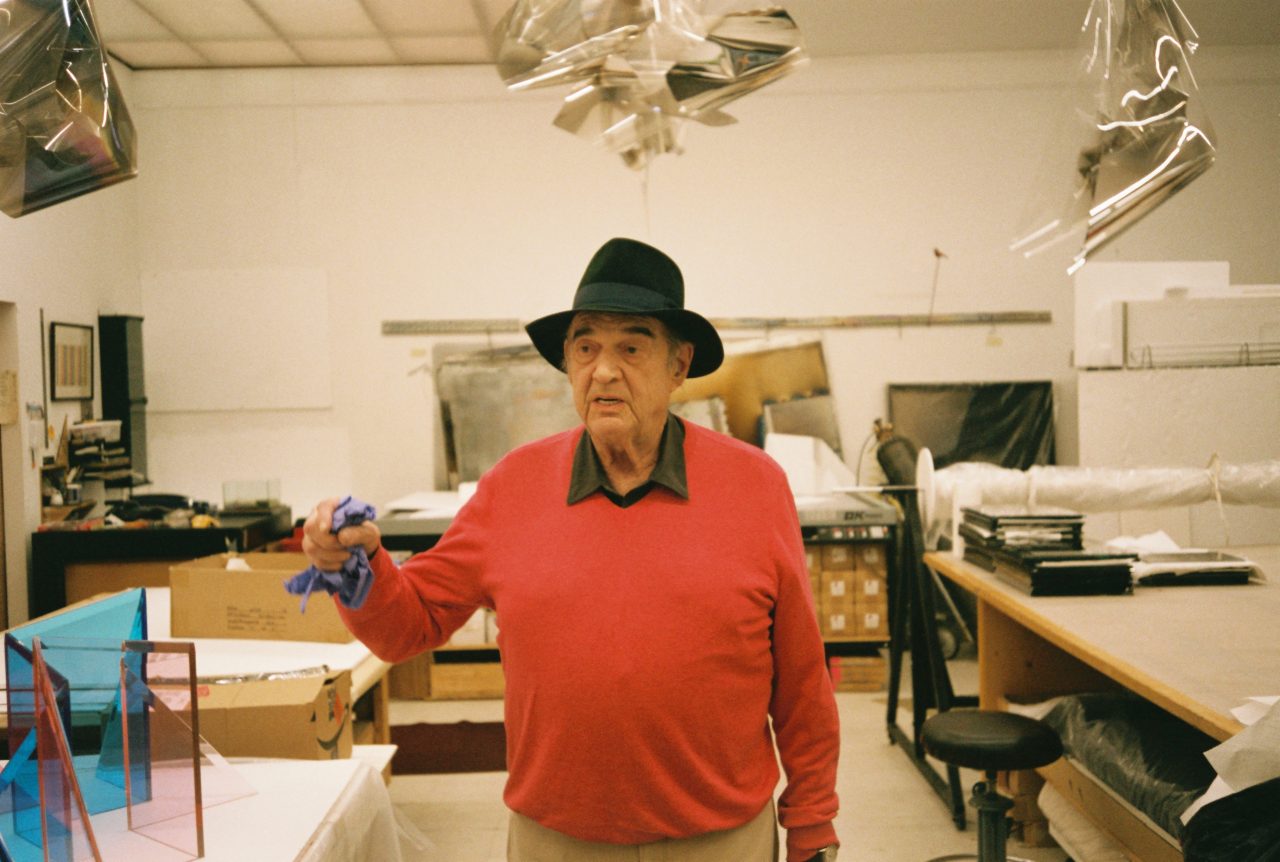
Larry Bell
American, b. 1939
A pioneering force in the Light and Space movement, Larry Bell makes multicolored glass sculptures that focus on the interplay of light, shadow, color, and environment. The artist often combines transparent and mirrored panes of glass to conflate the viewer, the art object, and its surroundings. He has also painted on glass panes and covered his three-dimensional cube sculptures with checker, stripe, and ellipse patterning. Bell has been awarded a Guggenheim Fellowship and a grant from the National Endowment for the Arts. He has exhibited extensively, including at the Jewish Museum, the Museum of Modern Art, and the Museum of Contemporary Art, Los Angeles. His work has sold for six figures on the secondary market.
High auction record
US$623.4k, Sotheby’s, 2008
Blue-chip
Represented by internationally recognized galleries.
Collected by major museums:
Museum of Modern Art (MoMA)|Centre Pompidou|Tate|Solomon R. Guggenheim Museum|Whitney Museum of American Art|The Metropolitan Museum of Art|National Gallery of Art, Washington, D.C.|Hirshhorn Museum and Sculpture Garden|Museum of Contemporary Art, Los Angeles (MOCA)|Museo Reina Sofia|Art Institute of Chicago, Venice Family Clinic
Selected exhibitions
2024, Larry Bell. Works from the 1970s, Hauser & Wirth
2020, Larry Bell. Still Standing, Hauser & Wirth
2018, Larry Bell: Time Machines, ICA Miami
Larry Bell has used the industrial process of vacuum deposition to coat glass surfaces since 1962. He obtained his first vacuum chamber in 1966 and a larger one in 1969, making it possible to work with large-scale glass surfaces. In March 1978, he made his first ‘vapor drawing’ on paper, using a modified version of the vacuum coating process.
The material Bell uses to coat both his glass and his paper works is Inconel, a nickel chrome alloy containing iron, magnesium, cobalt and traces of other metals. This is loaded onto filaments (similar to those used for light bulbs), which are then placed in a vacuum chamber. Each filament is approximately six inches long and is made up of stranded tungsten wire around the centre of which is wrapped a twelve inch strip of Inconel wire.
To make a ‘vapor drawing’, the artist tapes a sheet of paper to a steel sheet which is then rolled or curved in the vacuum chamber for coating. He controls the coating process by masking the paper with strips of 1 Mill (1/1000 of 1 inch) thick plastic film which he cuts in varying widths and lengths and tapes to the steel sheet. After the initial coating process, the artist may remove the sheet, re-mask the paper and subject it to the vapor source again, until the composition is complete.
Once the paper has been placed in the chamber at an angle so as to catch the Inconel deposit, air is withdrawn from the chamber, creating a vacuum. A small quantity of pure oxygen is then released into the vessel and an electric current is passed through it. The electrical discharge purges the surface of the paper of any extraneous matter, thus preparing it for coating. This process lasts for about four minutes, after which the high voltage discharge is shut off and the pressure inside the vacuum chamber is reduced. A current is then applied to the filaments holding the Inconel material. As a result, the Inconel vaporises and fills the chamber as a gas which is deposited onto the paper as a thin film. The variation in thickness of this coating is determined by the curvature of the steel sheet, in relation to the Inconel-bearing filaments, so that areas closest to the vapour source receive a heavier coating and those curving away from the source, a lighter one. The artist purchases the Inconel material in California and uses a high vacuum coating apparatus which was built for him in 1968 by Edwards High Vacuum of Grand Island, New York. (The parent company is based in Sussex).
Asked about the relationship between his drawings and sculpture the artist states ‘Inherent in any aspect of an artist’s work are the prejudices that make up his rules for that work. The drawings are two dimensional, the sculptures are three dimensional. Both elements contain the traits of my interests, visual and otherwise’.